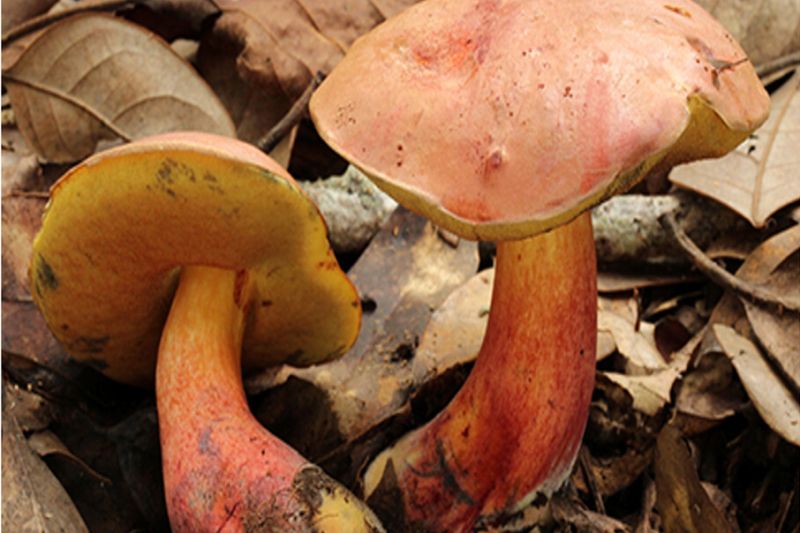
What do you receive when you order Fresh?
Whole fruiting bodies of Lanmaoa asiatica, brushed clean, sorted for condition and chilled to 2–4 °C within 12 hours of picking. They are wrapped in paper, packed in an insulated box with frozen gel packs and sent by express courier. Every box carries the batch number and harvest date.
| Form | Whole caps with stipes, not trimmed |
|---|---|
| Typical cap size | 4–12 cm across; mixed sizes unless you ask otherwise |
| Handling | Chilled to 2–4 °C within 12 h of picking |
| Packaging | Paper wrap, insulated box, gel packs frozen to −20 °C |
| Shipping days | Monday to Wednesday, express courier |
| Keeps for | About 3 days refrigerated after arrival |
| Season | Orders 1 June – 31 October |
| Origin | Yunnan or Cordillera, or no preference |
| Minimum order | 0.5 kg, in 0.5 kg steps |
What is fresh material best suited for?
Fresh tissue is the only format for work that needs living or intact cells: tissue isolation onto agar, RNA extraction, volatile profiling and observation of the bluing reaction. It is also the right choice for full morphological description, because cap colour, pore staining and the texture of the stipe change once the material is dried.
If your work is chemical and does not need living tissue, Fresh-Dried or the research powder is cheaper per gram of dry matter and keeps far longer.
How should fresh specimens be handled on arrival?
Open the box the day it arrives. Move the specimens, still in their paper, to a refrigerator at 2–4 °C and process them within three days. For RNA or metabolomics, cut tissue blocks and flash-freeze them in liquid nitrogen, then store at −80 °C. Avoid sealed plastic, which traps moisture and speeds decay.
Why does the flesh turn blue when cut?
In bluing boletes, damaged tissue exposes pulvinic acid derivatives such as variegatic acid to oxygen and enzymes, which oxidise them to blue quinone methide anions. The reaction is fast in fresh Lanmaoa asiatica and is one of its field characters. It fades in dried material and is not a sign of spoilage.
How much fresh material makes a kilogram of dried?
Fresh boletes are mostly water, typically 85–92% by weight. As a rule of thumb, 8 to 10 kg of fresh fruiting bodies dry down to 1 kg of Fresh-Dried slices. Plan quantities on dry weight if your protocol reports results per gram dry mass.