The Cordillera Central of northern Luzon has the largest natural pine forests in the Philippines. Our second origin is here, in Benguet and Mountain Province, where red-capped bluing boletes appear under Benguet pine during the southwest monsoon.
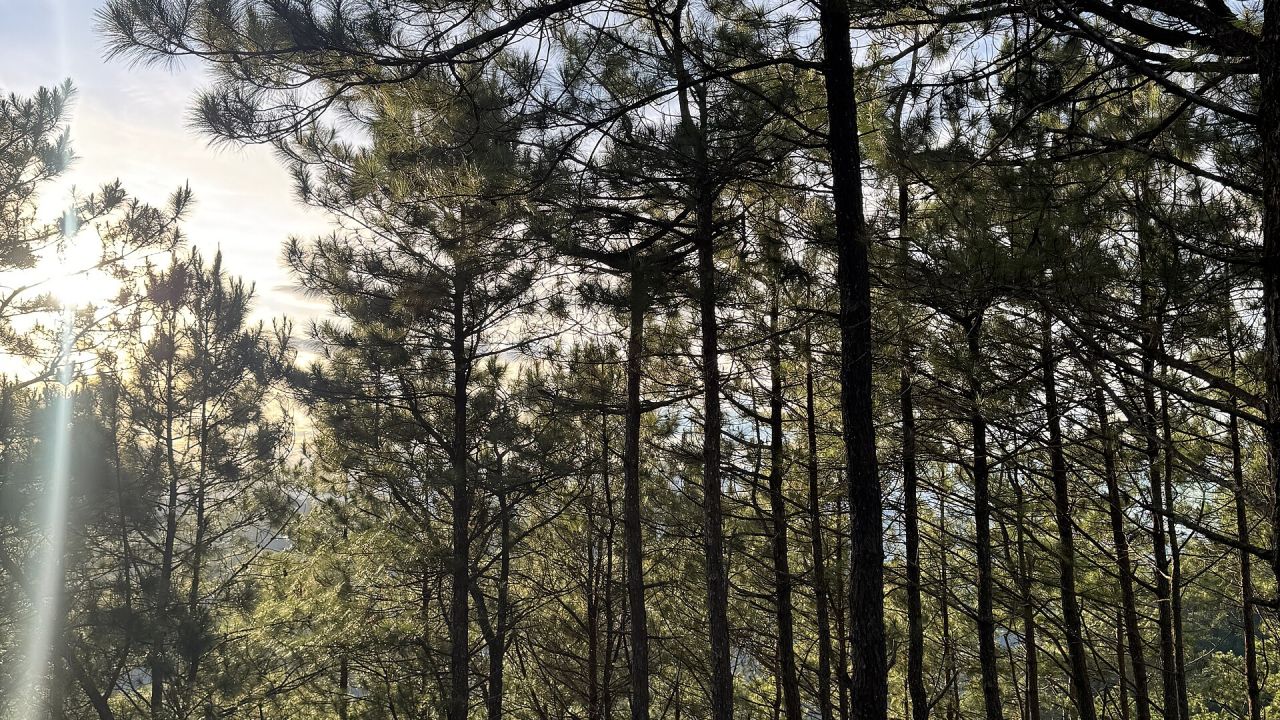
What forest do the Cordillera lots come from?
The lots come from Benguet pine (Pinus kesiya) forest between about 1,400 and 2,200 m, with mossy oak forest on the highest ridges. Pinus kesiya is the same pine species that grows across southern Yunnan, which is one reason the two regions share many ectomycorrhizal fungi.
- 1,400–2,200 mAltitude band of our collection sites
- May–OctFruiting window, following the southwest monsoon
- Pinus kesiyaDominant host tree
- ITS checkIdentity confirmed against Yunnan reference sequences
Is the Cordillera material the same species as the Yunnan material?
We release Cordillera lots as Lanmaoa asiatica only after morphology and an ITS sequence match Yunnan reference material. Published records of the species outside China are still few, and the genus contains look-alikes. Lots that do not match are not sold under this name.
If your project depends on geographic origin, for example population genetics or a comparison of metabolite profiles between regions, choose the origin explicitly in step 3 of the order form instead of “No preference”.
When is the Cordillera harvest?
The southwest monsoon usually reaches northern Luzon in May, a few weeks ahead of Yunnan. Fruiting under Benguet pine follows, with the most reliable collections from June to September. Typhoon weeks interrupt picking, and lots can pause for several days after a storm while trails are cleared.
How are Cordillera lots handled and shipped?
Handling matches the Yunnan process: same-day collection, sorting, chilling or slicing and drying at 45 °C to under 8% moisture, then batching and testing. Dried and powder lots are consolidated before export. Fresh Cordillera lots ship by express courier from Luzon, so transit times to the United States are often shorter.